Man lives and has his well being among plants and animals, but of the extraordinary abundance and variety of this life he generally has but the slightest conception. AH of it is well ordered and subject to the laws of nature. In fact, the universe is cosmos, not chaos, and all inorganic and organic nature is subject to unaltering natural laws. But this does not mean that all of nature’s parts are fixed and unchangeable, rather “ nothing is constant but change.” In other words, all Nature is in ceaseless change subject to natural laws.
¶ Prodigality of Organic Nature
Truly, the prodigality of organic nature is beyond comprehension, and equally so is the wastage of individuals. Nothing is more obvious in Historical Geology than the many failures in the long procession of life, and yet “ nothing is more clear in Paleontology than Nature’s set purposes.” What these purposes are is not known, but the order, sequence, and meaning of life — the evolution of organisms — naturalists are constantly trying to unravel.
The upper sunlit waters of the oceans abound in microscopic life, chiefly of plants. They are the primary food supply of all animals and their abundance is attested at night by the wonderful glow of the seas; at times of greatest abundance there are millions of individuals in each quart of water. Nor is microscopic life less abundant on the bottoms of the shallow seas, and shell banks have countless individuals upon which countless other a nim a ls are feeding. McAtee says that an acre of woodland about Washington, D. C., has in the upper inch of soil not fewer than two million plants and more than one million animals, while the meadows have about ten and sixteen times as many more, respectively. This is in the temperate climate where variety is far less than in the tropics. On the swampy forest surface beside the Amazon River, Beebe found of easily seeable animals about a thousand within an area of 4 square feet, which means more than six billion individuals in a mile of the jimgle floor.
[ p. 36 ]
Aristotle (384—322 b.c.) is said to have described about 500 different kinds of organisms in his History of Animals, and it is probable that he knew more forms than any other naturalist up to a few centuries ago. In 1758 Linnaeus noted in his famous work, Systema Naturae, 4236 species, and now naturalists estimate the described forms as numbering upward of 600,000. Of this total about one half are insects, and Howard estimates that when all the insects are described the number will be nearer 3,500,000. Of living plants, on the other hand, fully 200,000 kinds are described and it is thought that this total will easily rise to above 300,000.
The number of known fossil forms is much smaller because of the great imperfection of the geologic record. The degree of this incompleteness can be brought out with striking effect by the statement that upward of 13,000 species of Uving butterflies have been described, while of fossil forms only 22 are known, and one half of these are from a single locality, Florissant, Colorado. In 1820 there were known 127 species of fossil plants and 2100 of fossil animals. An estimate brought up to date places the number at about 100,000 species, and when this sum is contrasted with that of living described forms, the ratio is as 1 to 5. This, however, is very far from the exact truth, for we are contrasting all of geologic time with the very short present. If, then, we wish to determine the number of kinds of animals that have lived in the geologic past, we must multiply the 600,000 described species of living forms by at least 200 geologic units, as so far determined for North America, each one of which is at least the equivalent of Recent time; and even then the figures are far below the actual number of species that have lived. Though it is true that fife became progressively more varied with time, still the comparison made is only with the described species and not with the estimated number of kinds that probably are hving at present. Therefore it seems safe to state that for every 100,000 kinds of fossil animals that lived we probably know only about 1000. However, we must emphasize the fact once more that “ not onefifteenth part of the exposed rocks of the earth has yet been closely scrutinized for these life records” (Clarke). “ The whole geological record is only the skimmings of the pot of life,” says Huxley; and yet it does give a vivid glim pse of the extraordinary array of organisms which peopled the world of the past.
Variability of Individuals and Species. — All observant and thinking persons know that a young horse is always a horse and never a zebra or an ass. In other words, animals during their growth do not change into other species, and even though they alter their [ p. 38 ] appearance greatly from birth to maturity, these alterations are characteristic of the form observed and of no other. Therefore it is said that each species “ breeds true ” in its specific characters, and this relation between parent and offspring is called heredity. A close analysis of this resemblance, however, shows that it is never an exact one, for each individual of every species has its own peculiarities. Long ago the Italian naturalist Ariosto (1474-1533) said that Nature made the individual, and then “ broke the die.” Truly no two organisms are exactly alike, and these individual differences are grouped under the term variation. In other words, all organisms in their structural and physiological characters vary more or less in all directions, even though in general they closely resemble their parents.
¶ Theory of Organic Evolution
History. — Thinking men during the past millenniums have in their religions explained how the present worlds came into being, and nearly all of these accounts have to do with creations through the acts of gods. In more recent times, naturalistic theories have been advanced, and these have to do with evolution, or the processes of unfolding and development of Nature.
With the rise of the sciences, and more especially the accumulation of knowledge regarding the succession of fossil faunas in superposed strata, each one of which is a different life assemblage from the previous one, there arose in explanation the theory of Catastrophism and Re-creations. This was brought into general acceptance chiefly through the teaching of the great Cuvier (1769-1832). In practice, the theory meant that in the past the entire earth had undergone catastrophes or revolutions, when all organisms were locally or universally destroyed. These were followed by times of crustal stability and re-creations of more advanced faunas than the previous one. In Cuvier’s time, however, the geologic sequence was poorly [ p. 39 ] known, and the catastrophisms of a century ago are now interpreted as the breaks,” the locally absent records in the completed geologic sequence. Since then, the strata with their fossils that fill in these breaks have in the main been discovered elsewhere, and these often have the transition animals unknown in Cuvier’s time. In this way the facts of nature were learned and the ground prepared for the evolution theory of to-day.
Aristotle, the greatest of Greek naturalists, rejected the idea of special creations and believed in the operation of natural law and not in chance or the survival of the fittest. He believed in “an intelligent design as the primary cause of the changes which have been wrought in nature. . . an internal perfecting tendency impelling organisms to greater and greater perfection ” (Lull).
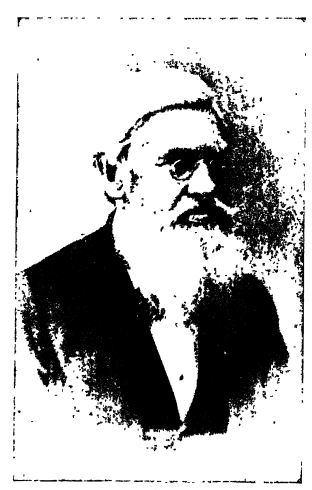
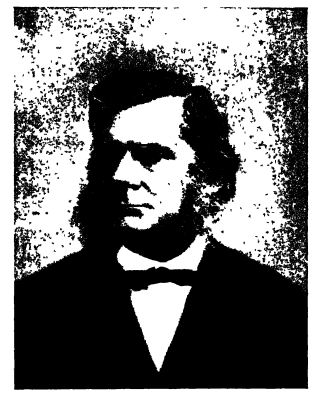
In modern times it was Galileo, Newton, and Laplace who, gave the thinking world a scientific theory as to the evolution in the inorganic world; and Buffon (1707-1788), Lamarck, Darwin, Wallace, and Spencer who foreshadowed the present theory of organic evolution. It now seems strange that the educated public fought this theory so strenuously, and that it took almost a generation of thunderings by Huxley in England, Haeckel in Germany, and Gray in America to prepare the way for its acceptance. Now we see clearly that the theory of evolution is without doubt the grandest generalization of the nineteenth century. It not only transformed the method of study in Biology, Geology, and the social sciences, but as well has given a new point of view to all science, art, and even to progressive religions.
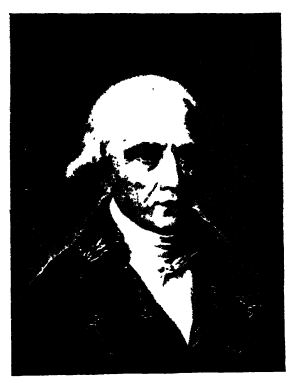
Jean Baptiste de Lamarck (1744—1829) was the father of the theory of mechanical genesis in evolution, — the use and disuse of structures, and the inheritance of acquired characters. In 1809 Lamarck held that the organism is shaped by the envnonment; that usage develops organs in the individual, which through disuse become atrophied and finally lost; that the characters acquired [ p. 40 ] during life are inherited; that there is a fundamental unity in the organic world; and that there is a slow but continuous progression from simple to complex organisms. To accomplish these things in nature, he said that all that is needed are matter, space, and a long time.
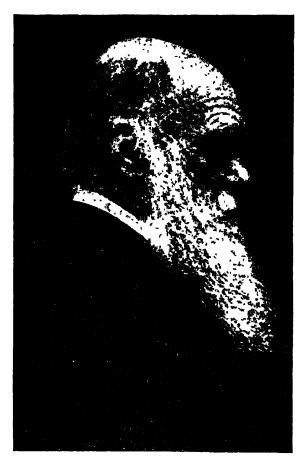
Charles Darwin (1809-1882), “ the emancipator of human minds from the shackles of tradition,” is by general consent recognized as the father of the modern theory of organic evolution. The essence of his theory, Thomson says, is in the two words variation and selection, or, as Wallace puts it, in descent with modification. Through his books, and chiefly the epoch-making Origin of Species (1859), came the conviction that life has been continuous, descending from previous life with change, resulting in the complex floras and faunas of to-day. His was the idea of organic evolution as opposed to supernatural creation.
The Web of Life.— All Nature is interrelated and interlocked, and this is as true of the inorganic world as it is of life. We may illustrate this web of life by the following, taken from Thomson: The sun’s energy has made plant life possible, and plants are to man his food, clothing, habitations, and in wood and coal his warm hearths, steam and power. Again, cats condition the extent of a crop of clover or honey, for they keep down the number of* field mice, which in turn feed on honey, and a scarcity of honey means fewer bees that are so necessary to fructify the flowers, of the clover. Finally, the dissemination of plague is largely conditioned by the presence of the house rat, and an absence of these rodents leads to better sanitary and healthier life conditions for humanity.
The Struggle for Existence. — Organic nature, in all of her wondrous beauty and astonishing variety, appears to the careless [ p. 41 ] observer to be in a condition of ease, play, and contentment. Play, however, generally means getting food, and contentment is at the expense of pain and death to another individual. Truly all organic nature is continually struggling to maintain itself, in the securiag of food, in resisting unfavorable environmental conditions, in mating, and in the effort to rear its young. Death is inevitable, overtaking most of the organisms while they are still young, and hence few are maintained to maturity to propagate their own kind. The world is, nevertheless, and always has been fully populated, since each species unconsciously seeks at the very least to maintain its own numbers or to increase them. “ A stock tends to increase in nunibers,” accordiug to Conklin, “until it reaches the limits of its habitation, when it becomes fixed, since the means of subsistence is subject to the law of diminishing returns.” More young are born each year than can possibly exist. Some individuals produce but a single offspring, while others cast upon the world a million or more during the season of reproduction. Life’s struggle is exceedingly harsh toward the young; they are mercilessly weeded out because of unfavorable habitations and starvation, snapped out of existence by a predaceous enemy, or made sick unto death by extremes of heat or cold, or by bacterial diseases. Success in life is the rare exception. In a struggle so severe, any advantage, however slight, may therefore be decisive in prolonging the life of the individual and stimulating the origin of new variations. Nature constantly eliminates the unfit, and through the survival of the fittest, the species are maintained, though with constant alteration. The whole course of evolution, therefore, centers in the processes of reproduction, and the favored individuals transmit their valuable qualities to their offspring, generation after generation.
[ p. 42 ]
Influence of Environment on Organisms. — Organic evolution “ implies a mastering of all the possible haunts of life ; it has been a progressive conquest of the environment ” (Thomson). So long as the environment of organisms remains unchanged, they undergo comparatively little modification, and such conditions prevailed during long geologic times. However, as the earth’s shell has been periodically raised into mountain ranges and the oceans have as often flowed widely over the continents, it follows that the environment of plants and animals has undergone repeated and vast alterations. When the seas flowed over the continents, the habitable areas, or habitats, of marine life were enlarged at the expense of the land floras and faunas. The struggle for existence among the land plants and animals was therefore made harder, and evolution was quicker among them. Contrariwise, when the seas contracted, the struggle among the marine forms was enhanced, due to diminished space, and on the lands the former mild climates were apt to change into more or less arid ones. Not only this, but many times mountains were thrown up simultaneously in many lands, thus bringing on great reductions of temperature, arid climates, and even glaciaL ones. Such changes led to the “ critical periods ” in the history of the earth, times especially fraught with danger to the organic world, and affecting deeply not only the life of the land but equally the shallow-water marine forms. Evolution was then especially rapid, blotting out floras and faunas that had long dominated the earth, and forcing the rise of new races which in their turn quickly attained mastery over their physical and organic environment. “ Wherever there is life there is some degree of mind” (Thomson). (See also Chapter XXXII.)
The Pulsing of Life. — The paleontologist is deeply impressed with the periodic appearance of new stocks of plants and animals, connected in the main with marked changes of the environment. He therefore holds that it is the periodically changing physical conditions that are the greatest impelling force in organic evolution. On the other hand, the long intermediate times of equable and mild climate and nearly constant environment produce but slight specific alterations, the changes in one direction known as orthogenetic. Therefore to the paleontologist evolution appears at times to proceed far more quickly, and as it were by leaps and bounds. These are the times of quickened adaptations to meet the great changes in the environment, while a slow or even stagnant evolution accompanies the long intermediate periods. Accordingly, evolution [ p. 43 ] is not dependent on naere life activities, but mainly on the marked geographic, topographic, and climatic changes that periodically recur upon the earth.
¶ Evidence Proving the Theory of Organic Evolution
That all of the manifestations and complexity in the organic world have come about through descent with modification is shown in the following facts: (1) The living organisms are not distributed at random throughout space, but exist where we find them because of prehistoric conditions (Geographic Distribution). (2) All organisms are related to one another and this determined relationship can be readily visualized in a genealogical tree wherein the degree of ancestral parentage is shown in the trunk, main branches, stems, and leaves (Classification. See Fig., p. 13). (3) In related adults the organization and structures are alike, and these are unlike in unrelated stocks (Morphology). (4) The lines of descent are in a measure repeated during the earliest stages of growth in the individuals (Embryology). (5) The appearance of plants and animals throughout the geologic past is in harmony with the theory of progressive evolution from the structurally simple to the more complex (Geology and Paleontology). These topics will now be discussed in detail.
Geographic Distribution. — According to Gadow, The subject of geographical distribution is the dispersal of life in space and time. The key to the present lies in the past.” A httle insight into the living organisms soon reveals the fact that the kinds of plants and animals are not of universal distribution. Every one knows that elephants and lions are found only in Africa and Asia, and the giraffe only in Africa, that reindeer and caribou are restricted to northern lands, kangaroos to Australia, and humming birds to the three Americas. While this restriction is largely controlled by temperature, yet that is not the whole cause, for we know that the tiger of southern Asia lives also in Siberia, where it has fortified itself against the cold by the growth of a thick fur. Restriction of species is further controlled by mountain ranges, moist and dry climates, forest and open plains regions, and chiefly through isolation of the land masses by the oceans. These are the barriers of the biologist, which prevent free intermigration between areas. Another kind of barrier which confronts animals in their wanderings is exposure to the local diseases caused by parasitic organisms. However, these barriers do not explain, for instance, the present wide distribution of the bears in Europe, Asia, [ p. 44 ] and America, where they range from the cold north into tropical Brazil, and from Siberia into Alaska, lands that are now separated by at least a hundred miles of ocean surface. But when we are told that in the geologic past Asia and America were united by a land connection, a land bridge, and that both had a warmer climate than at present, it is readily seen that the bears could have spread from the former continent into North America and so finally into South America. In other words, the present geographic distribution of organisms is not wholly due to the environment of to-day, but is further conditioned by that of the geologic past (paleogeographic distribution).
Also, similar environments do not produce identical organisms. Life descends from life, and as it is slowly but constantly changing in response to the constant alteration of its environment, the forms change and under favorable conditions the individuals grow ever more nimierous and spread in wider and wider waves of wanderings, though, on the other hand, some organisms continually succumb under the struggle for existence. Species originate locally, and though some may remain thus restricted, others spread from their dispersal centers into wider areas according to the favoring nature of their surroundings and geography. These conditions are the controlling factors underlying the dispersion of all life, whether of the land or of the waters.
Classification. — The very fact that there are individuals of a kind that can be grouped into species and these into genera establishes the view of relationship. The further fact that in many cases there are no distinct differences separating the species or even the genera is further proof of descent with change.
Morphology (from the Greek word for form, hence the science of form). — “ According to the evolution theory, all higher organisms have descended from the lower by a process of transmutation. . . . This bond of union is first and foremost expressed in the morphological traits of the related species. For as the related animals (or plants) are descended from the same ancestral type, they must possess on the whole the same anatomical structure and organization, more or less modified in each individual case according to the lifehabits of the organism. It is this fundamental identity of structure that we mean when we speak of the ‘ unity of type ’ in a given class of organisms, while the different parts and organs which are built on the same general plan in the various species are said to be homologous. In contradistinction, analogous organs are such as fulfill the same physiological function without possessing the same [ p. 45 ] anatomical structure, as, e. g., the wing of a butterfly and that of a bird, which, though both serving for flight, are constructed each in a totally different manner ” (Herbert).
Homologous structures offer the most striking evidence for the transformation of species. A good example is seen in the limbs of vertebrates, where the main muscles and bones are alike in a frog, reptile, horse, dog, or man. In detail, however, there are marked variations; in man, for instance, there are five fingers and toes, while the horse has only the third finger and toe remaining, although if we trace the ancestry of the modern horse into the geologic past we learn of fossil horses with three or four functional digits on each limb and with the rudiments of the remaining ones still present to show that the ancestral forms had the primitive five digits in use on each limb.
In the animals just mentioned we pass from homologous structures to vestigial structures, for the one-toed living horse still has in each limb the vestiges of the second and fourth digits, known as the splint bones. The same is true in the fossil horses, but in the oldest ones the splint bones are the vestiges of the first and fifth digits. The whales and porpoises of the oceans are descended from land mammals which had four legs adapted for walking, but the front limbs of these ancestors have been greatly modified in the living forms into swimming paddles, while the hind ones are to all outward appearance gone, although in reality the vestiges of them lie buried deeply in the flesh. In most of the snakes not even traces of any of the limbs are present, but in the python or boa there remain bony vestiges of the hind limbs. In the birds, s imil ar loss of the front limbs can be observed, as, for mstance, in the flightless ostrich, whose wings are not fully developed, while in Hesperornis of the Cretaceous (Chapter XL) there are no wings, but deep in the flesh lies a single bone, representing the former wing.
Through disuse once useful organs may be largely lost, never to be recovered by subsequent descendants. In many animals the use of remaining relics is not always easily discerned, for these vestigial structures are but traces of former important organs. In man there are 180 such vestigial organs which serve no useful purpose, and which prove his animal descent. The human embryo in its earliest growth has a distinct external tail, and in every adult there is the vestigial venniform appendix, “ a small blind process leading from the large intestine, which, serving an appropriate function in vegetable-feeding animals, survived as a useless structure in man, and is at times even a source of danger ” (Herbert).
[ p. 46 ]
Law of Irreversible Evolution. — In the previous paragraphs it was shown how animals may lose certain structures. The parts once lost can not be redeveloped out of the vestiges in subsequent’ evolution, but are gone forever. However, similarly functioning ones may be developed anew out of other anatomical structures. For instance, all bivalves in their embryonic free life have two eyes that are completely lost when they become addicted to the water bottoms and the shells begin to appear. On the other hand, adult scallops, which are also bivalves, have a whole series of eyes along the anterior margin of their mantles. The fine eyes of adult cephalopods are totally different structures from those they have in their embryonic life. Whales in their adaptations to the oceans have completely lost their hind legs and do not use their modified front ones in swimming; they have, however, developed a wholly new mode of locomotion by their powerful fluked tails.
Embryology. — Embryology is the science which relates to the development of embryos, or the earliest stages of individual growth before the assumption of the distinctive form and structure of the parent. All living things begin their existence in a single cell that may be compared to the imicellular plants and animals, the most primitive condition of organisms; the original or mother-cell in the higher multicellular entities giving rise by repeated divisions to the adult specific organism. In this way each multicellular plant and animal recapitulates in a condensed and foreshortened way its ancestral history. This law was first formulated by the great German biologist, Haeckel, who termed it the biogenetic law, or ontogeny, and defined it thus: “ The Ontogeny (development of the individual) is a short recapitulation of the Phylogeny (development of the race).”
Ontogeny illustrates “ the lingering influence of a long pedigree, the living hand of the past, the tendency that individual development has to recapitulate racial evolution. In a condensed and telescoped manner, of course, for what took the race a million years may be recapitulated by the individual in a week ” (Thomson).
In the highest vertebrates, including man, the embryos during their development pass through a series of transformations which represent roughly the evolutionary stages of their lower vertebrate ancestry. In the earliest of these stages there is hardly any difference between -the embryo of a fish, salamander, tortoise, chick, hog, calf, rabbit, or man. This can only be explained on the supposition that all of these animals had fish-like ancestors. In the succeeding stages among the mammals, the embryos repeat [ p. 47 ] [ p. 48 ] practically only mammalian characters, thus showing that the ancestral history between the fishes and mammals has been eliminated, forgotten, and crowded out of their embryonic development.
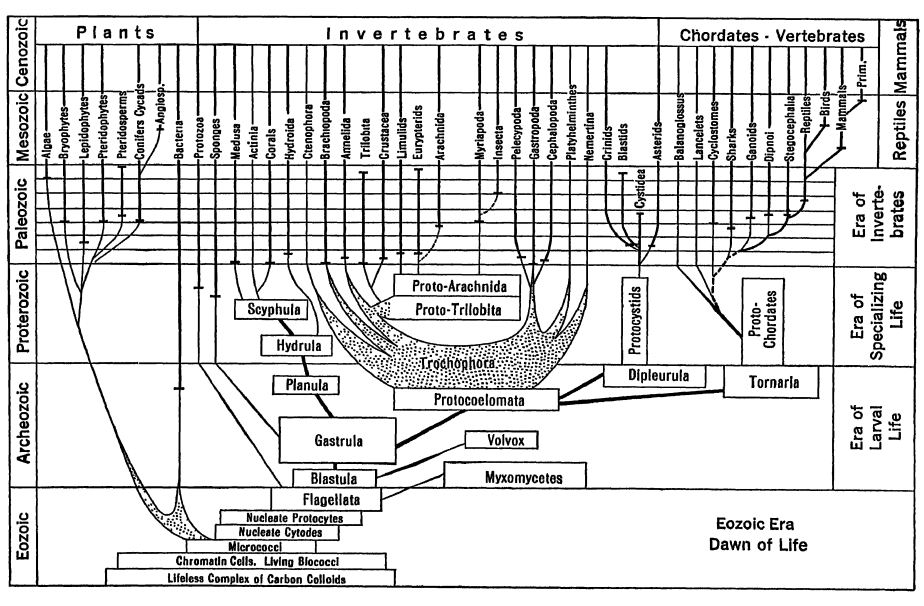
Geology and Paleontology. — A great array of fossils is now known, and their appearance in geological time (chronogenesis) has been determined. Geology begins in darkness, with an absence of all fossils, but this very want of organic record is evidence that the earliest forms of life were perishable and could not have had the complexity of later organisms. In younger strata, however, there is an abundance of fossils, but nevertheless for a long time there is no evidence of land plants, and a land flora does not appear until still later times.
Not an insect is known until long after the appearance of the land floras. The earliest forms so far found were large plant-eaters and carnivores, but unlike the modern forms. They were followed by the most primitive of modern insects, the may-flies, dragon-flies, and true cockroaches; later appeared still higher types, but the dominant modern forms did not come until the rise of the flowering plants on which they are dependent.
Among animals, the first to appear were all water-breathers, and out of them arose the air-breathers. Not a shred of evidence for the existence of animals with backbones (vertebrates) is at hand until long after the backboneless forms (invertebrates) originated, the first representatives of the higher type being the fishes. Later came the higher amphibia or salamander-like animals, and out of them were developed the primitive reptiles. Reptilian birds with teeth appeared after the reptiles, and these but recently, geologically speaking, gave rise to the modern toothless birds. On the other hand, reptilian mammals originated earlier than the birds, and through a long process of evolution finally gave rise to the placental mammals, the highest type of animals. Finally, the line of mammals leading to man appeared first in the lemurs (monkeylike animals), shortly afterward came the true monkeys, and more recently arose the anthropoid apes and the ape-man. Study Fig., p. 47.
Such evidence must convince anyone of the fact that the organic world proceeded to develop in an orderly sequence from the simpler to the more complex types of structures and from the lower to the higher mentality. The higher intelligence had its origin, not in the sea but on the land, where the most severe of environments placed a premium on the ability to meet and master new [ p. 49 ] conditions. It was long in the making and not until geologically recent times did mind begin to evolve with wonderful rapidity in most of the mammals, and especially those in the line of man’s ancestry. Contrast the intellectuality of the dinosaurs, rulers of the medieval world, with a brain weighing one pound in a body of thirty-eight tons bulk, and man, master of the modern world, with a brain ratio of four pounds to one hundred and fifty of flesh and bone!
¶ The Meaning of it All
All theories as to the causes of organic evolution, Conklin says, agree in ascribing more or less importance to the influence of environment. Lamarckism maintains that changes in individuals are caused directly by changes in environment, that these individual changes are inherited, and thus bring about racial changes. Darwinism teaches that variations of every sort are caused by changed conditions of life, but that those which are iniurious are quickly eliminated while only those which are beneficial and well adapted to environment persist and constitute the building materials of evolution.
The results of evolution may be summarized in three words: Diversity, Adaptation, Progress. Diversity is seen in the endless progressive, retrogressive, useful, indifferent, or harmful variations that species undergo. Adaptation is adjustment to conditions of life, of means to ends, and structures to habits, and is brought about through natural selection. Progress means increasing complexity of body structures and fimctions, increasing specialization and cooperation of the parts and activities of organisms.
The Truth of Organic Evolution. — The question is often asked by those unfamiliar with the work of biologists: Is the theory of organic evolution widely accepted by the students of organisms? The answer is that scarcely any worker in the sciences of Botany, Zoology, or Paleontology now rejects the theory; in fact, all work in these studies is based on the concept of life having continuously descended from life with change since it began on the earth.
“ We could not teach geology without teaching evolution ” (Berry). There is now no question about the truth of organic evolution as opposed to the theory of special creation. One of the leaders in organic evolution, Bateson, recently said (1921), “ Our doubts are not as to the reality or truth of evolution, but as to the origin of species. Any day that mystery may be solved.” In other [ p. 50 ] words, what is under discussion among the biologists is the method by which nature has brought about the manifold organic changes that we see. No more intricate problem confronts man. It is therefore not remarkable that the entire solution or even the main parts of it are not yet at hand. The old notion of eternal unchangeableness with occasional upheavals has forever given way to the newer idea of progressive development, not only in organic nature but in all matter.
The student of evolution may at present reserve judgment as to what causes evolution, and as to how the extemgJ and internal conditions bring it about. Nevertheless the paleontologist holds firmly to the belief that progressive and retrogressive evolution is largely caused by the environmental conditions, and the use and disuse of organs. He sees entire groups of new plants and animals appearing while old ones are vanishing, and this mainly at the times of marked geographic, topographic, and climatic changes. To him there are periodically recurring critical times when there is a remarkably quickened evolution, with the emergence of new floras and faunas. Through it all there is in the main an upward trend from simplicity to greater and greater complexity, from thoughtlessness to instinct and finally to reason. And the evolution of the cephalopods and trilobites, crinids and brachiopods, horses and camels, rhinoceroses and elephants, the many aquatic adaptations of animals descended from land-living ancestors, the independent invention of flight by fishes, insects, birds, mammals, and man, and the differently derived and constructed breathing organs of snails and slup, scorpions and insects, amphibians, reptiles and mammals, all are to the paleontologist demonstrations that the changing environments and the will of organisms are of first import as causes for organic evolution. Collateral ones are use and disuse of organs, and mechanical genesis.
Of Charles Darwin, who first placed the doctrine of organic evolution on a firm scientific foundation, it has been said: “ In all the glorious company of immortal dead whose earthly frames are gathered in England’s great mausoleum, there is no other one who has done so much to modify the mind of thinking man ” (Schmucker).
¶ Collateral Reading
E. G. Conklin, The Direction of Human Evolution. New York (Scribner), 1921.
H. E. Gbampton, The Doctrine of Evolution. New York (Columbia University Press), 1911.
Charles Darwin. The Origin of Species, 1859.
V. L. Kellogg, Darwinism To-day. New York (Henry Holt), 1907.
R. S. Lull, Organic Evolution. New York (Macmillan), 1917.
H. H. Newman, Readings in Evolution, Genetics, and Eugenics. Chicago (University of Chicago Press), 1921.
H. F. Osborn, The Origin and Evolution of Life. New York (Scribner), 1917.
W. Bateson, Problems of Genetics. New Haven (Yale University Press), 1913.
E. G. Conklin, Heredity and Environment. 3d edition. Princeton (University Press), 1920.
F. Darwin, Life and Letters of Charles Darwin. London (Murray), 1888.
H. De Vries, Species and Varieties. Chicago (Open Court), 1904.
H. Gadow, The Wanderings of Animals. Cambridge (University Press), 1913. J. W. Judd, The Coming of Evolution. Cambridge (University Press), 1911.
J. LeConte, Evolution. 2d edition. New York (Appleton), 1897.
W. A. Locy, The Main Currents of Zoology. New York (Henry Holt), 1918. M. M. Metcalf, An Outline of the Theory of Organic Evolution. New York (Macmillan), 1911.
T. H. Morgan, A Critique of the Theory of Evolution. Princeton (University Press) 1916.
H. F. Osborn, From the Greeks to Darwin. New York (Macmillan), 1908.
W. B. Scott, The Theory of Evolution, New York (Macmillan), 1911.
J. A. Thomson, Darwinism and Human Life. New York (Henry Holt), 1909.