| VI. Harnessing Nature and Living Together Well | Title page | VIII. Multiplication of Powers by Conquering Distance |
[ p. 209 ]
PART III
MAN, THE COMMUNICATOR: FURTHER MULTIPLICATION OF MAN’S POWERS
PURPOSES OF PART III
- To show that communication is another of the great multipliers of man’s powers.
- To study the main forms of communication and how they have come to be what they are.
- To show the significance of communication for our living together well and to give a glimpse of the future of communication.
CHAPTER HEADINGS OF PART III
Chapter VII. Sign Language, Spoken Language, Written Language, Printed Language: Multipliers of Man’s Powers.
Chapter VIII. Multiplication of Powers by Conquering Distance.
Chapter IX. Multiplication of Powers through Trade : Money, the Language of Trade.
Chapter X. Passing on the Torch.
Chapter XI. Communication and Living Together Well.
[ p. 210 ]
A clever thinker once said that plants are “chemistry-binders.” He meant that plants grow and develop because they are able to “bind” or control various chemical elements. “Animals,” he said, “are also chemistry-binders. But they are more; they are space-binders. They are able to move about from place to place and thus aid their gro’wth and development. As for man, he is a chemistry-binder, a space-binder, and also a timebinder. He is able to bind or control, for his growth and development, the experiences of times past and is able to plan for future times.”
In Part III (Chapter VII to XI) we are to see that man’s ability to communicate has made it possible for him to be a time-binder; has made it possible for him to build upon the progress of all past ages and to cast the hnes of his thinking even out into the future. As we study the multiplication of man’s powers of communication, let us remember that we are studying one of the main reasons why he has so greatly surpassed all other forms of hfe. He has surpassed the animals, for example, not merely in the fact that he is a time-binder. That power of his to build upon the progress of the past has made him the scientific harnesser of nature who has conquered distance — has become a space-binder — far beyond the powers of beast or bird.
[ p. 211 ]
CHAPTER VII
SIGN LANGUAGE, SPOERN LANGUAGE, WRITTEN LANGUAGE, PRINTED LANGUAGE; MULTIPLIERS OF MAN’S POWERS
A. Spoken Language a Multiplier of Man’s Powers
B. Multiplication of Powers through Writing
C. Multiplication of Powers through Printing
Questions to Keep in Mind iraiLB Reading This Chapter
- In what ways has man increased his ability to communicate?
- In what ways does communication multiply man’s powers?
In the last four chapters we have seen how man has harnessed nature and made her do his bidding. He has learned to make and shape materials, control natural powers, increase his food supply, see things too small or too distant to be seen with the naked eye, improve his health — he has, in short, greatly multiplied his owm rather puny physical powers. The record of what he has already done and the vision of what he seems likely to do in the future ivith these physical powers are nothing short of wonderful. We are now to see that he has done equally wonderful things in the realm of communication. This has meant still further multiplication of his poivers.
The enormous extent of modem communication. — Each of us is swept by a continual flood of communication. The customs and wisdom of the past, the discoveries of the present, the hopes of the future pour in through written and spoken word, through music, painting, sculpture, and architecture. They pour in through the mails, newspapers, [ p. 212 ] magazines, books, and movies. “They come with the speed of radio pulsations or the crawl of the caravan.” They are passed on by every group of which we are a member — the family, the church, the school, the club, the business house. We make contacts with others through trade and transportation, using the pack train, the railroad, the steamship, and the airplane. Our waking hours are spent in a neverending sea of communication.
We are to study this sea of communication in the next five chapters.
¶ A. Spoken Language a Multiplier of Man’s Powers
(Gesture language; the origins of speech; how languages change; what speech means to us.)
Gesture language, an early form of communication, is still much used. — We do not know whether there ever was a time when man could not speak. We probably never shall know. We can, however, be perfectly certain of one thing. Primitive peoples, such as Neanderthal man, had very few words. They had a few score words, or at the most a few hundred, as compared with the seven hundred thousand and more that are in a compi’ehensive English dictionary. This means that primitive man could not communicate nearly as well by words as we can. He made much use of a form of communication called gesture language.
It is surprising how much can be told by this gesture language, especially by people who use it a great deal as do the deaf and dumb, and as do all primitive people who have not many spoken words. Pointing to one’s self means “I,” pointing to the person addressed means “you”; pointing to the inside of the lips may mean “red”; pointing to the sky may mean “blue.”
[ p. 213 ]
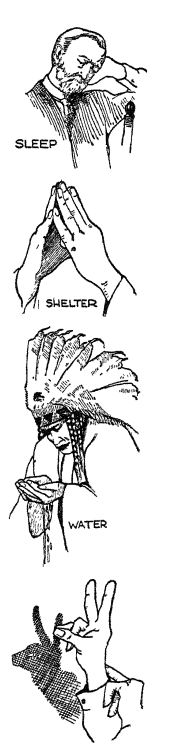
“Sleep” can be shown by closing the eyes and leaning the head on the hand. “Death” can be shown by the sign picture for “sleep” and then pointing to the ground. “House” can be shown by putting the tips of the fingers together like a roof. “ Smoke ” would be, perhaps, a spiral upward movement of the hand. A good illustration of an Indian picture-in-the-air is their gesture for water. They pretend to dip up water in a hand and to drink out of the hand. Perhaps it is from this gesture that our western settlers came to refer to water as “the drink,” and to the Mississippi River or a large lake or the ocean as “the big drink.”
We ourselves make much use of gesture language to-day. We cower or crouch as a sign of fear. We shiver to show that we are cold. We wrinkle up our faces to express pain or disgust. We laugh or smile to express joy. We shrug our shoulders. We stick out our tongues. We wunk. We clap our hands or shake hands or kiss. We get a very large part of the story in our theaters, and particularly in our moving picture theaters, from gestures of the actors. As children we delighted in shadow shows where the shadows of hands against a screen may illustrate rabbits, goats, donkeys — whatnot.
But gestures alone do not make a thoroughly good means of communication. They cannot be seen after dark nor around a corner, and they are not very accurate. Most [ p. 214 ] of them can mean too many possible things. They are, furthermore, a slow way of talking. It is accordingly fortunate for our hving together that men early (and it may be from the very beginning) made use of spoken words.
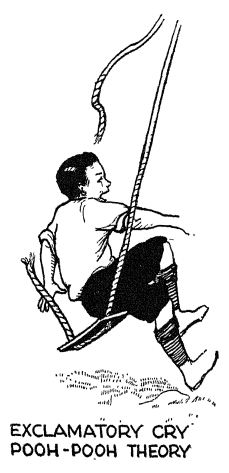
How did man get words? — Of course, even the animals have voices, and their cries mean something. The dog whines or barks or growls to express very different things. But these are "cries,” not “words.”
If we assume that man at one time had no spoken words, how did he get them? We do not know. We can only make shrewd guesses. We start with one known fact. The vocal equipment in the throat and brain of man is more dehcate and flexible than that of other animals. Our scholars argue that man, starting with such good speaking equipment, developed his spoken language in some or all of the following ways:
1. The pooh-pooh theory of speech. — One way is what we shall call exclamatory ones. Since even animals have exclamatory cries which tell others whether they should hide or run or turn to fight, of course earhest man could do as much. We find in our words to-day a good many sounds that seem to go back to exclamatory cries. “Tut,” “oh,” “ouch,” “hi,” “ho” are examples. Our word “pooh” is just the sound of blowing to show contempt, and such sounds are in other languages as well. The idea that at least a part of our words came from exclamatory cries is [ p. 215 ] sometimes called the pooh-pooh theory of languages. Of course it is a long distance from simple exclamatory cries to our more than seven hundred thousand words, but we are accustomed by this time to think of man developing very slowly over thousands of years.
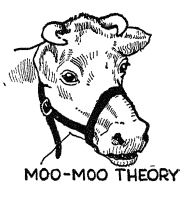
2. The how-wow theory of speech. — Then, too, it is argued that man picked up words in another way. He made imitations of sounds he heard, and these imitated sounds came to be words. It is not difficult to find plenty of this kind of words. Without stopping to indicate from what languages they come, notice these words: for rooster, “ cockadoodledoo,” “aaoa,” and “okoko”; for donkey, “heehaw” and “eo”; for crow, “kaka” and “caw-’ caw”; for cat, “miau” and “mau.” All of us know what is meant by the “hum” of a machine, the “boom” of a cannon, and the “gurgle” of a jug. This explanation of the origin of words is sometimes called the bow-wow, or moo-moo, theory.
3. The yo-he-ho theory of speech. — Still another theory may be called the social, or yo-he-ho theory. It assumes that when earhest men did things together, such as heaving at a log, they naturally made sounds that came in time to stand for the name of the act. Thus, “yo,” “heave,” and “haul” might be our modern form of some of the very earliest words.
Ways in which languages change. — As was said earher we do not know how man got his first words. Once he had some words, however, we can understand how he got more of them, for we can see how he does it to-day. Our languages are ever changing.
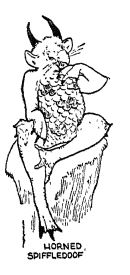
New words. — For one thing, every language is continually adding new words. Sometimes these new words [ p. 216 ] come in simply as changes in intonation. For example, in Siamese different ways of pronouncing “ha” mean “seek,” “pestilence,” and “fine.” A great many Chinese words are of this sort. Sometimes new words come in through some change in the word itself. “Ride” and “road,” “speak” and “speech,” “spin” and “spinner” are illustrations. Sometimes we get new words by imitation. “Electrolier” is an imitation of “chandelier.” Sometimes new words come in by combining old words. “Hardware,” “steamship,” “headman,” “headache” are such words. Sometimes they come in by borrowing from other languages. Our word “engine” comes from the Latin “ingenium” which means that it was an ingenious thing. Sometimes they come in as just straight inventions. “Kodak” and “gas” are such words. A Dutch chemist of about 1600 a.d. made up the word “gas,” which is to-day the father of such words as gaspipe, gashght, gaseous, and gassy. Probably there is no family of children that has not invented words for its own little group. I know of one such group that talks of such imaginary animals as the “hairless spiroofer” and the “horned spiffledoof,” whatever they may be.
New meanings for old words. — Then, too, as time goes on, old words frequently get new meanings. “Bank” once meant the bench used by the money changer in the market place, and a “bankrupt” had his bench broken. A “knave” was once just a boy and later a servant. To-day we have a head of an army, a head of a coin, and headings of a speech. We lose our heads, we collide head-on, we head the procession, we bring a boil to a head. Evidently “head” has taken on many meanings.
[ p. 217 ]
Words disappear. — We lose words, too. In the dictionary there are words marked “obs.,” wliich means obsolete, or no longer used. There are others marked “vuL,” which means they are “vulgar” in the sense that they are not used by our best writers or talkers. Many of these were formerly in good usage.
Speech knits us together. — It would be hard to overestimate the importance of speech in our living together. We said earlier that a group is any number of people, whether large or small, who think and act about the same things in much the same way; that is to say, they have common interests. Of course, groups think and act alike as a result of communication, and especially of speech.
But talk does not merely knit us together in the present. It knits us up with all the past as well. As soon as any group has a considerable number of spoken words, there develops what we call tradition.
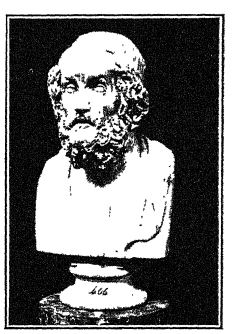
We saw how important the Iroquois story-teller (page 41) was in passing on to the younger generation the traditions and the “right” ways of living of the tribe. Other peoples have had their story-tellers also. The bards of the Greeks passed down from generation to generation the stories that were later gathered together and are known now as the Iliad and the Odyssey of Homer. In medieval times there were storytellers, the minstrels, who went from castle to castle telling stories and singing sonp of the deeds and glories of their rulers and their peoples. We must not forget, too, the [ p. 218 ] story-tellers of every family — the father, mother, older brothers and sisters.
Language is a tool for thinking. — Talk, then, is a means of getting thoughts of the past and of the present. We should be a sadly ignorant people without our spoken words. But our words, both spoken and written, do more than merely carry thought. They greatly increase our ability to think. They are tools for thinking. Many a time you have seen a person who is at work at a problem, moving his lips and muttering to himself. He does this because the forming of his words helps him make his thoughts more clear. This indeed is the real reason for recitations in our school work. We xmderstand a thing very much better by reducing it to words and telling others about it. We could never have thought out our sciences if we had not had words. That shows how important words are.
¶ B. Multiplication of Powers through Writing
(How we got the alphabet and our present ways of writing; what they mean for us.)
The written word was needed. — The spoken word, important and useful as it is, does not meet all the needs of communication. It does not help us communicate with anyone who is beyond the reach of our voice. Even when the hearer is within reach of our voice he may not catch all we say, as we know from what used to happen in our childhood whispering games. Then, too, if some time goes by, the memory may not hold the message correctly. For such reasons, the traditions and stories that are passed down from father to son keep changing. If messages are to be kept exact and carried to persons beyond the reach of the voice, such a device as writing is necessary.
[ p. 219 ]
There are several very clear steps in the development of writing which finally led to the use of the alphabet. These steps are:
- Mere memory helps.
- Picture writing that carried the whole story.
- Picture writing that stood for a word idea’ (ideo grams).
- Picture writing that stood for sounds (phonograms).
- Phonograms that stood for syllables.
- Phonograms that stood for the beginning sound of the syllable (a letter of an alphabet).
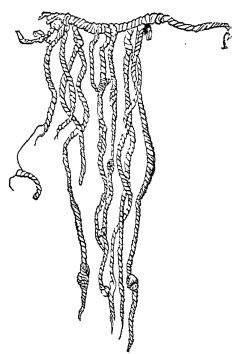
Peruvian Memory Help
The first step toward writing was memory helps. — The beginning of writing is found in memory helps, such as your mother made use of when she tied a string around your finger to help you remember something. Early man had many such devices. The ancient Peruvians had “quipus.” These were systems of knotted cords. The cords were of several colors, and the knots were of many sizes and forms, so that the quipus helped the ancient Peruvians to remember their history, helped them to keep records, helped them to send orders to districts far away from their capital, helped them to keep track of details of their armies, and helped generally in all their memory w’ork. Other peoples have used such devices as message sticks on which different kinds and numbers of notches meant different things. Others have used [ p. 220 ] painted pebbles. We are told of a city where the city fathers showed the boys the boundaries and whipped them soundly at all important landmarks so that the boys would remember the locations! We already know (see page 43) how the Iroquois used wampum strings and wampum belts.
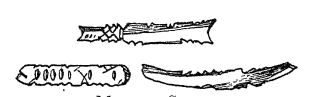
One of these is an invitation to a party
Then came pictures that told the whole story. — The difficulty with all such devices as notches on sticks and knots in cords is that these tilings do not resemble the events to be remembered, and so their help is not as great as it might be. Very, very early man learned to improve on such memory aids by using picture writing. This means that he made a fairly complete (even though crude) picture which set forth the story he wished to tell. We have such records on the walls of the caves of men who lived before neolithic times.
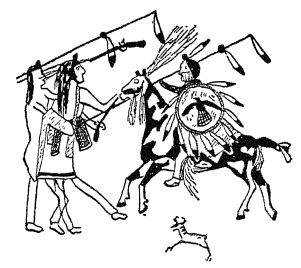
And here is the way a Dakota chieftain. Running Antelope by name, told of one of the events of his life. On this day he slew two Arikara Indians. The spear in his hand shows how he killed one Indian. The other Indian, as the picture shows, was both shot with a musket and struck down by a spear. The little symbol dowm at the bottom of the picture is supposed to be a running antelope. It is the old chief’s trade-mark, so to speak. Had you ever thought of the modern trade-mark as picture writing?
[ p. 221 ]
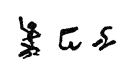
Gradually pictures came to stand for words, for ideas, rather than for a whole story. — The pictures we have just examined are the simplest form of picture writing. They are complete pictures telling complete stories. As you would expect, through the centuries people learned to abbreviate pictures Just as we abbreviate words to-day or even write them in shorthand. Take, for example, this illustration[1] of how the Egyptian picture writing for “man” was abbreviated. The first picture is easily recognized as . that of a man. It is a hieroglyphic sign used about 5000 b.c. The second is an abridged form used by the priests in copying, at about 3000 b.c. The last sign came into popular use about 900 b.c. Anyone can see that the first picture is intended to be a man; but one is not likely to see that the later forms are men unless his attention is called to the fact.
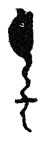
As time dragged slowly on, the various peoples who used picture writing took stiU another step. They came to use the picture, not to mean the thing pictured, but to be a sign or symbol of something else. For example, the Pueblo Indians had on much of their pottery a picture of a tadpole,[2] but it did not mean tadpole. It meant summer. 5 They came to use the tadpole’s picture in this way be"T cause the pools of water were full of tadpoles in the summer time.
The short name for a picture thus used is ideogram (idea writing). This means simply that a picture is used to convey a certain idea to the person who looks at it.
The next step was to have pictures stand for sounds. — Through long centuries picture-writing peoples came to [ p. 222 ] make the pictures stand not for the thing pictured, but for sounds of their spoken language. In other words, the pictures became what we call phonograms (sound writing). For example, pictures of an eye, a tin can, and a fly would mean, “I can fly.” The pictures represent sounds here and not the things pictured. They are phonograms instead of ideograms. We are familiar with these in rebuses.
Sound pictures next came to be used for syllables, instead of whole words, and presently only for the be ginnin g sound of a syllable. — Once people had learned to use sound pictures (phonograms), they were well started towards an alphabet. The old sound picture, which once meant a whole word, came gradually to mean just a part of the word — a syllable — and finally just the beginning sound of the syllable. It was now a letter of an alphabet, for an alphabet is a set of symbols standing for the basic sounds in a language.
How this all came about may be illustrated from the writing of the Egyptians.[3] Very early they used the picture of an owl to mean their word for owl, which was “mulak.” They gradually stopped drawing the full picture of the owl. Instead, they made a shorthand owl by using a little symbol that looked a good deal like the owl’s ears with a beak between them. Gradually also this owl’s-ear symbol became a phonogram for the sound “mulak.” Later it came to stand for a syllable “mu,” which is the first part of the fuU name “mulak.” Still later it came to stand only for the first sound of the syllable “mu.” To-day we call [ p. 223 ] that our letter M, which shows clearly its owls-ears parentage.
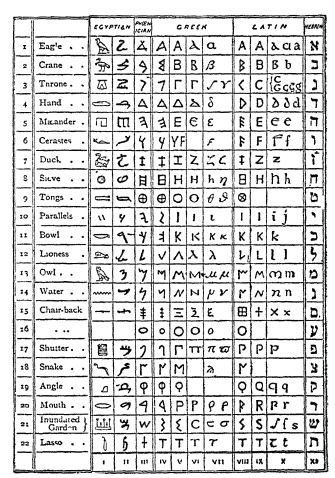
History of Some of Our Letters
What ones can easily be traced back to Egypt?
There have been and still are many alphabets. Our own alphabet has apparently come down to us from the old Egyptians through the Phoenicians and the Greeks and the Romans. The ancient Egyptians started, as did so many other peoples, with picture writing. They carried this picture writing through all the steps we have studied, and finally they had an alphabet. After they got their alphabet, they did not stop using the earlier devices. They kept on using all of them, — the full picture, the shorthand picture, the phonogram, the syllable phonogram, and the single-sound phonogram. This, of course, was a very mixed system of writing made up of hundreds of symbols.
It happened that there was, bordering the Mediterranean, another group of people, the Phcenicians, who were great borrowers. They borrowed the Egyptian system of writing. Being shrewd borrowers they borrowed only the elementary sounds. In other words, they borrowed the alphabet and [ p. 224 ] left all of the cumbrous earlier symbols in Egypt. The Greeks and the Romans borrowed the alphabet from the Phcenicians, and from them it has finally come down to us.
What our present-day writing is like. — We may be glad that the Phcenicians borrowed only the alphabet. We have to learn only twenty-six letters. Out of them we make more than seven hundred thousand words. As far as that is concerned, we can, if need arises, make millions of words from these twenty-six simple sounds. There are languages that have never been reduced to such simple sounds. The Chinese written language, for example, has thirty or forty thousand characters, — these characters being just shorthand picture writing of whole words. A person who learns to write in that language or to read the writing of that language must learn a huge number of these signs. What a long time it takes to get tools to think with in such a language!
We must not think that the work of developing our means of written communication has all been done. It is still going on. One example may be seen in the development taking place in shorthand. The purpose of modern shorthand is to enable one to write at about the rate another can talk. That is done by making symbols which are even simpler and more quickly made than are our letters. Shorthand is very widely taught to-day and is used extensively in secretarial work.

Although the alphabet is our main tool for writing to-day, we still make some use of earher devices. We still use picture [ p. 225 ] writing in rebuses, in maps, in such expressions as the “T-square” and “S-hook.” Our Roman numerals I, II, and III are picture writing of fingers sticking up. In any almanac you can see such expressions as “3 rises at 6 hr. 23 mi.” ?, showing the mirror-and-handle of Venus, stands for the star Venus. In some of the European time-tables, a little picture of a cup means a place where you can get light refreshments; and a little steamboat, a place where you transfer to the steamboat. Our wTitten language has many, many devices that have come down to us from the earlier days of picture writing.
¶ C. Multiplication of Powers through Printing
(Movable type, printing by power, paper making, the linotype, and the monotype give plentiful printing.)
Writing is a great multipher of man’s power of communication. It enables him to communicate with others much more exactly than can be done by speech, and to communicate with others who are distant from him. The written message can be sent far away; it can also be preserved for later generations. These are very great gains. Now let us see how the tiny trickles of man’s early writing have grown to great floods of communication through the invention of printing. Let us see, first, the slow improvement in writing materials; second, how books and newspapers were made before printing; third, how printing came into the world; fourth, how printing was multiplied through the harnessing of power and machinery.
Man’s slow improvement in writing materials. — It is often true that man makes only slow progress for a long time after he has developed one of the multiphers of his powers. It happened thus with writing. Once he became able to write, thousands of years went by during which he [ p. 226 ] merely made gradual improvements in his writing materials. Some of the earliest written records were made on stone. The Bible story of the Ten Commandments shows this stage of writing very clearly; "And the Lord said unto Ivloses, ‘Hew thee two tablets of stone’ . . . And he wrote upon the tablets . . . the ten commandments.” Other records were written on tablets of clay, which were then dried in the sun or baked in an oven. Still other records were carved on the walls of temples and tombs, or on the sides of cliffs, or on wooden planks. Leaves of palm trees and the flat sides of bones were used. The inner bark of the lime tree, the maple, the ehn, and the linden served on occasion. So also did linen and the metals after man had learned to make them. Of course, men early turned to skins for making writing material. Some samples of skin writing that are at least 4000 years old are still in existence.
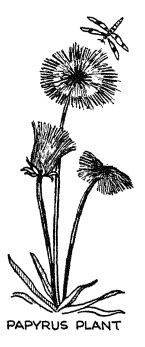
At least 5000 years ago the Egyptians learned to use the papyrus reed to make writing material. We get the word "paper ” from "papyrus.” The fibers of this reed lie in thin sheets. When the reed was cut into strips, these sheets could be separated and then placed side by side upon some smooth surface. On top of such a layer of these sheets, another layer would be laid at right angles. These layers would then be moistened or pasted together, dried in the sun, and one surface made smooth for writing. The result was a small sheet that could be used as we use paper to-day. This was the main writing material of Egypt, Greece, and Rome until several centuries after the birth of Christ. Anyone can see that it was slow work to make papyrus, and that it would be scarce and expensive.
[ p. 227 ]
As for pen and ink, early writers got along reasonably well. For writing on wax or stone, they used sharp-pointed instruments. For writing on bark or papyrus or skins, they used a brush or a hollow reed shaped much like our modern pen. Still later the quill was thus used. The ink was made in many ways, the most conunon way being by mixing soot and gum.
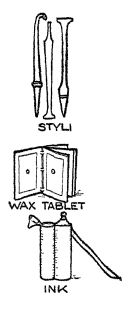
It is easy to see that there would not be many books made under such conditions. Writing materials were hard to make, scarce, and expensive. Then, too, the number of persons who could read and write was very small, being just a small group of priests and scholars. Nevertheless, as time went on and as men saw what a useful device writing was, enough of it was done in two or three little spots of the earth, such as Alexandria and Rome, to enable us to say that there was a business of bookmaking.
How books were made before printing. — In the busy market place of the Rome of two thousand years ago there was a corner used by the booksellers. Here were bookshops, the stone pillars of which announced the names of the newest books, displaying specimen pages or even entire rolls. Here the few scholars of the day met and talked. Let us stand among them. One of them has just come from the bookshop carrying a long, narrow roll of papyrus which he opens and reads.
We enter the bookshop itself, but there are no books of the kind we know. On the shelves are piles of rolls like the one our scholar friend was carrying. Some are made of papyrus; some are made of parchment. Hanging at the end of each roll is a card (titulus) that tells the title of the work and the name of its author. Some of the rolls are thicker than others, just as some books to-day are thicker than [ p. 228 ] others. As we look at them we can understand that our word volume conies from the Latin volvere, which means to roll.
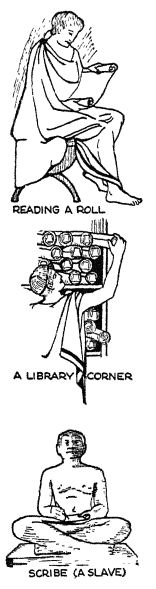
In one room of the shop, books are being made. Here are the bookseller’s scribes bending over rolls of papyrus either copying or taking down the words of a man who is reading aloud from a manuscript. Bringing out an edition is a simple process in this shop of ancient Rome. The author brings his manuscript to the publisher. If the pubhsher thinks it is worth publishing, he puts his scribes to work. In a day or two the finished book is ready and is advertised on the stone pillars of the bookshop.
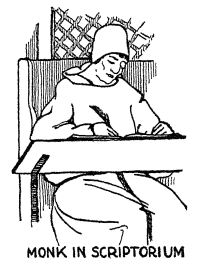
We ought to be grateful that, later, people learned how to make the book (codex is the technical name) instead of the roll. Notice how much easier the book is to hold; how much easier it is to turn pages in search of a fact or a word than it is to unroll the roll; how readily we can use a bookmark, put in a footnote, keep books on shelves, have several books spread out for consultation at one time, as compared with the difiiculty in doing such things with a roll. Take this book you are reading. How much more readily you can use it than the fifteen or twenty rolls it would have taken! As your history teacher will tell you, after the Roman Empire lost its hold in Europe during the fifth and sixth centuries after Christ, there followed the long period of the Dark Ages, in which .barbarians destroyed much of the Roman culture. As for the writing and the making of [ p. 229 ] books, very little was done from the time of the fall of Rome down to the fifteenth century. That little was done by the monks in their monasteries, by a few professional scribes, and later by the scholars and stationers in the few universities.
How printing came into the world. — Everyone knows what printing is. It consists of making words and illustrations appear by pressing inked letters or figures up against a smooth surface. The typewriter shows how it is done. In the typewriter, a raised letter strikes an inked ribbon up against a sheet of paper, and thus prints letters on the page. The little device with the raised letter (made in reverse) at the end is called a “type.”
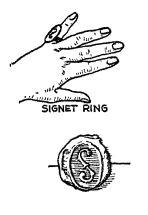
Printing is a very simple thing. It is so simple that quite primitive savages know how to carve patterns on hard materials and “print” in soft clay. For thousands of years kings and other important persons have used signet rings to “sign” documents. A pattern was made on the ring, and this was pressed into a lump of wax stuck on the document. The Chinese knew how to carve words (in reverse) on wooden blocks and how to print from them, perhaps 2000 yeai’s ago. If there had been good communication between Europe and China in those days, Europe would have had printing much earlier than she did have it. But even so, Europeans gradually became able to print from wooden blocks. At first they printed merely the illustrations for their books from such blocks and wrote out the text. Later, they carved out whole pages in reverse and printed from them.
[ p. 230 ]
The movable type greatly increased ability to print. — If printing is such a simple thing and if people have long known how to print, what is meant by saying that about 1460 a.d. Gutenberg or Faust or Coster (there is a great quarrel as to who deserves the credit) invented printing and thus multiplied man’s powers of communication? Just this. Gutenberg (he is usually given the credit) learned an easy and cheap way to make a metal type for each letter, instead of carving out a whole page on a wooden block. A block page could be used only for printing that page. Gutenberg’s metal types, however, could be “set” for one page and then reset for other pages and so on. This is called printing from movable type. It greatly lowered the cost of printing.
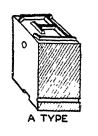
The gain that comes from movable type may be seen from the word "print” itself. If we engrave the word "print” on a wooden block in reverse (TNIRP) the block will reproduce only that one word. If, however, we make types for each letter, we can combine them in various ways and can make not only the word "print,” but also pin, pit, pint, pip, rip, nip, nit, it, in, tin, tip, and trip. If, in addition, we find a cheap and easy way of making large quantities of these movable types instead of doing all the slow, hard work of engraving the block, we have certainly greatly increased our abihty to print. As a matter of fact we have found cheap ways to make type. We can to-day make 60,000 letters an hour.
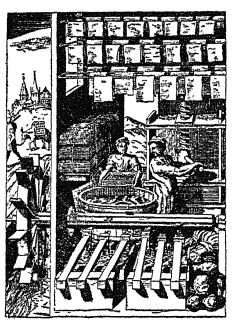
Medieval Paper Making
The pulp was beaten with, the aid of a water wheel. A thm layer of pulp was spread over a sieve. Water drained out and the resulting sheet of paper was hung up to dry.
Printing multiplied by harnessing power and machinery. — It is the same old story. After Gutenberg invented his mxiltiplier in about 1450, there were for centuries merely slow additions to man’s printing ability. There were no such floods of printed matter as we have to-day. Many things had to happen first.
[ p. 231 ]
Plentiful paper. — For one thing, we could not have much printing untD. we had cheap and plentiful paper instead of the scarce and expensive papyrus and parchment. We learned to make paper from the Chinese. About 750 a.d. some Arabs captured a few Chinese and from them learned to make paper by beating flax and other fibrous plants into a pulp and then drying this pulp in thin sheets. This knowledge spread from the Arabs to Europe. Long before Europeans learned to print, paper had become their main writing material.
But as the picture shows, paper making was a slow process by which a few sheets (no rolls) a day could be made. Man had to wait until metal was more plentiful and tmtil he had harnessed power before he could have giant papermaking machines turning out tons of paper in the time formerly taken to make pounds. It was not until 1770 that the Holland beating machine for beating the pulp was invented; not until 1804 that Fourdrinier made the machine that bears his name; not until 1827 that the Fourdrinier machine could make an endless roll of paper; not until 1840 that it was really proved that wood pulp could be used to give a plentiful supply of raw material. In other words, only the last few generations have seen a plentiful supply of printing material. And, of course, plentiful printing had to wait for plentiful material.
[ p. 232 ]
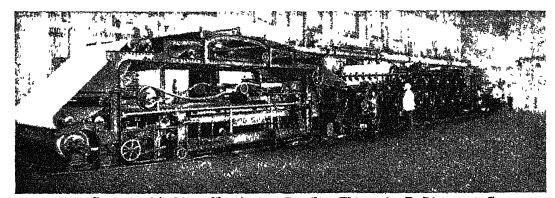
Fourdrinier Machine
Pulp enters this machine at one end and emerges at the other as a roll of paper. This giant IS only a small part of a modern paper mill.
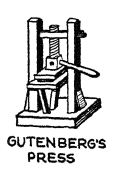
Power presses. — For another thing, we could not have plentiful printing until the simple printing press of Gutenberg had been replaced by modern printing machinery. This picture of Gutenberg’s press shows a ramshackle, wooden hand press on which one could print a few sheets an hour. The later wooden presses were well built, but there was no other marked improvement in the printing press until 1798 (over 300 years!) when Stanhope made a press of iron. In 1812-13 Koenig made a press that used a revolving cyhnder. A revolving cylinder could be attached to an engine. The result was that in 1814 the first power newspaper press was used by London Times to print newspapers at what was thought the marvellous speed of 800 per hour.
In 1845 Hoe learned how to fasten the type on the revolving cylinder and to feed the paper up against the type by means of other cylinders, thus becoming able (after some improvements) to turn out 20,000 copies per hour. In 1865 Bullock printed from a continuous roll of paper instead of from sheets, and this brought the output up to 48,000 copies an hour. Since that day various improvements have given [ p. 233 ] us the modern printing press which can print, cut, fold, and count 300,000 newspapers per hour. But only the last few generations have seen printing machinery that could work rapidly. And, of course, plentiful printing had to wait for the rapid printing press.
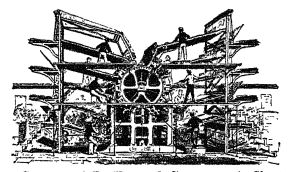
Printing in 1850
The paper had to be fed to the press in sheets. To-day continuous rolls are used and the feeders (men.) are no longer needed.
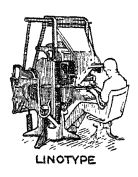
Linotype and monotype. — Still another thing must be said. We could not have plentiful printing until we had found some way to set type rapidly. It is a slow, expensive job to set type “by hand.” It was not, however, until 1884 that a machine, the linotype, was invented to do that work, something like that of a typewriter. When a key is pressed a matrix, or mold, for that letter falls into place. Key after key is pressed until a whole line of matrices is in place, and then hot metal squirts into the matrices and behold! a lineo’-type! The matrices are then automatically picked up by the machine and put back in place to be used again. The process can go on day after day. The main trouble with the linotype (it is not a serious trouble) is that if one mistake is made in a line, the whole line must be reset. Even this trouble ceased to be a trouble in 1888 when the monotype was invented. In the monotype, one type at a time is cast, — not a whole line. Accordingly, only the incorrect letter needs to be replaced when an error occurs.
Illustrations. — Plentiful paper, power-driven printing presses, and power-driven typesetting machines have made [ p. 234 ] type printing plentiful and inexpensive. The invention in 1796 of lithography, by which pictures could be transferred to plates and printed, was the first step in making it easy and inexpensive to print pictures. In the last two generations such strides have been taken in this field that pictures are now a commonplace in our printing.
The newness of abundant communication through printing. — No matter in what direction we turn, we are amazed at the newness of our present ways of living together. Our easy command of fire, our abundance of metals, our harnessing of power and power-driven machines, our scientific knowledge, our plentiful printing are all new. To see clearly how new our plentiful printing is make another chart like the one on page 84 and insert the dates and events of this chapter. Use the heading:
¶ Six Hundred Years of Printing
With that chart made and in a notebook, the dates may be forgotten if only we keep our general impression of the newness of inexpensive printing. "Our world is only in the beginning of effective ways of passing knowledge on.”
One thing our schools do. — By this time it should be clear why certain things are done in the schoolroom. The drill in the souinds’of our words is full of purpose. It is giving us the tools out of which we can make words, and this will help us think. The drill in writing gives us the same sort of tool. The drills in dramatics, in art, and in music are partly intended to add to our enjoyment of life, but also they are partly intended to make us better communicators.
Our schools do well in making us good communicators. Good habits of oonununication are absolutely necessary to happy living together in our group. They let us rea,ch back and think the thoughts of all men who have gone before; [ p. 235 ] they put us in a position to pass these thoughts and our new thoughts on to later generations.
¶ Problems
- Define or explain:
Tradition, The pooh-pooh theory of language
Rebus, The bow-wow theory of language
Charades, The yo-he-ho theory of language - Look at the paragraph on “the enormous extent of modern communication’ on page 211. Thus far to-day, through what means mentioned there have you received communications?
- Plan out how to tell in gesture language the way African savages made iron. See page 90, Chapter III.
- Do we use gestures to-day mainly as a whole language in itself or mainly as a means of aiding the spoken language?
- What is the difference between cries and words? Is a parrot a word user in the same sense that we are? Why do words give man a broader mental life than mere cries could give him?
- What good can come from talk? Can harm come from it?
- “Our science could never have developed without spoken and written language.” Show why this is true.
- Many of our words come from Latin. Explain why some persons think it important to study Latin.
- Be sure you understand the meaning of each of these steps in the development of the alphabet:
- a. Picture writing that told the whole story.
- b. Picture "writing that stood for a word idea (ideograms).
- c. Picture writing that stood for sounds (phonograms).
- d. Phonograms that stood for sjdlables.
- e. Phonograms that stood for the beginning sound of the syllable.
- “Writing meant a great increase in the ability of people to cooperate with one another.” Show why.
- A quick, keen tool is better than a clumsy one. Show that our alphabet is a better tool than the word-characters of the Chinese. Show that young persons can get to work more quickly with our tool than with the Chinese tool.
- Make a list of cases in wiiich it is worth while to be able to write as fast as a person can talk. [ p. 236 ]
- Could one tell of geographical locations by spoken word alone, unaided by printed maps?
- This book could not have been made unless:
- a. Man had learned to write;
- b. Chemistry had helped make the material;
- c. Metallurgy had been developed;
- d. Mathematicians had studied levers;
- e. Engineers had made machinery.
Give an illustration of the effect of each of these five matters in making this book. Can you add to the five?
- “ The printed page is the door by which one enters the larger rooms of life.” Explain.
- In what ways was Gutenberg’s movable type an improvement over block printing?
- Why are books cheaper to-day than they were in 1500? Would you give the same reasons when comparing to-day with 1800?
- The Chinese knew how to make paper perhaps 2000 years ago. Europeans have known how to make it perhaps 1000 years. How, then, do you explain the fact that there was no such machine as that of Fourdrinier until a little over 100 years ago?
- Why is it important to have plentiful and inexpensive printing?
- Printing has been revolutionized in the last three generations. [How?
- That’s a dirty piece of newspaper blowing up the alley,” said a boy, “So it is,” said his father, “and it is one of the most wonderful things in the world, at that.” Why did he say so?
- Find out what the mimeograph and the multigraph are. How are they used in communication?
- Make the chart mentioned on page 234.
- Answer the questions at the beginning of the chapter, page 211.
¶ Interesting Reading
Marshall: Readings in the Story of Human Progress, Chapter VII.
- Gesture Language (twm complete stories told entirely by gestures).
- Feral Man (what happens to persons who do not communicate with others).
- Words and Speech as Aids to Thought (what words and speech meant in the growth of Helen Keller’s mind).
See also Chapter X.
Problems to think over are given in these reading selections.
| VI. Harnessing Nature and Living Together Well | Title page | VIII. Multiplication of Powers by Conquering Distance |